


The Reality of Senior Isolation
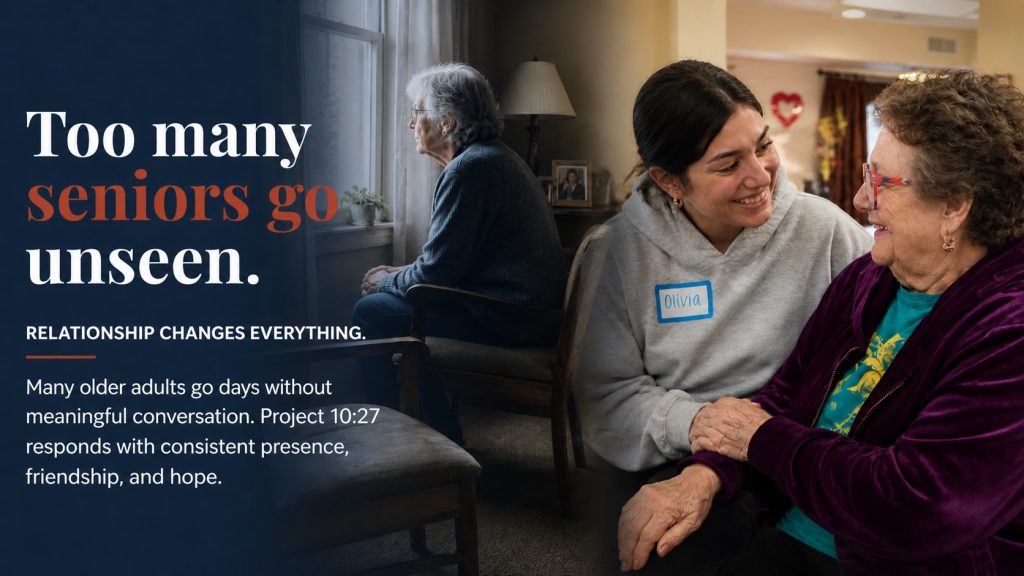
Senior isolation is often quiet, hidden, and easy to overlook. Many older adults live alone, have outlived a spouse or close friends, no longer drive, or face health and mobility challenges that make regular community participation difficult. Over time, their world can become smaller—fewer conversations, fewer visitors, fewer opportunities to be known, encouraged, and included.
For many seniors, loneliness is not simply the absence of activity. It is the absence of meaningful connection. Programs and services can meet important needs, but they cannot replace the power of a trusted relationship—someone who knows a senior personally, listens with care, recognizes changes, and faithfully returns.
The effects of isolation can be deeply personal. Seniors who feel disconnected may experience increased sadness, anxiety, loss of purpose, spiritual discouragement, and declining confidence in their place within the community. Many begin to feel unseen—not because they are unimportant, but because the natural support systems around them have weakened or disappeared.
This reality is especially significant in rapidly growing communities across Bexar and Comal Counties, where many older adults are aging in place while family, church, and neighborhood connections are increasingly spread out. Some seniors are physically present in our community but relationally disconnected from it.
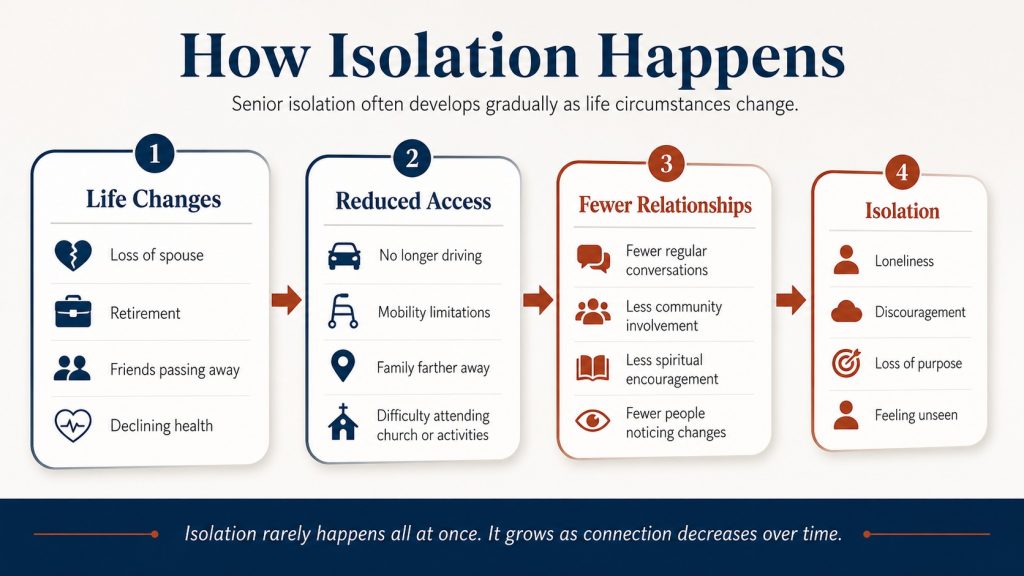
Senior isolation rarely happens all at once. For many older adults, it develops gradually as life circumstances change. The loss of a spouse, declining health, transportation barriers, or the death of close friends can quietly reduce a senior’s daily connection to others. Over time, their circle of relationships becomes smaller, and the absence of consistent, meaningful interaction can lead to loneliness, discouragement, and a growing sense of being forgotten.
Loneliness Should Not Be The Final Chapter
Senior isolation is often quiet, hidden, and easy to overlook. Many older adults live alone, have outlived a spouse or close friends, no longer drive, or face health and mobility challenges that make regular community participation difficult. Over time, their world can become smaller—fewer conversations, fewer visitors, fewer opportunities to be known, encouraged, and included.
For many seniors, loneliness is not simply the absence of activity. It is the absence of meaningful connection. Programs and services can meet important needs, but they cannot replace the power of a trusted relationship—someone who knows a senior personally, listens with care, recognizes changes, and faithfully returns.
The effects of isolation can be deeply personal. Seniors who feel disconnected may experience increased sadness, anxiety, loss of purpose, spiritual discouragement, and declining confidence in their place within the community. Many begin to feel unseen—not because they are unimportant, but because the natural support systems around them have weakened or disappeared.
This reality is especially significant in rapidly growing communities across Bexar and Comal Counties, where many older adults are aging in place while family, church, and neighborhood connections are increasingly spread out. Some seniors are physically present in our community but relationally disconnected from it.